
-
Table of Contents
- The Development of Trestolone Acetate: A History of its Discovery and Use in Sports Pharmacology
- The Discovery of Trestolone Acetate
- The Use of Trestolone Acetate in Sports
- The Development of Trestolone Acetate as a Pharmaceutical Drug
- The Current Use of Trestolone Acetate in Sports
- Pharmacokinetic and Pharmacodynamic Data
- Conclusion
The Development of Trestolone Acetate: A History of its Discovery and Use in Sports Pharmacology
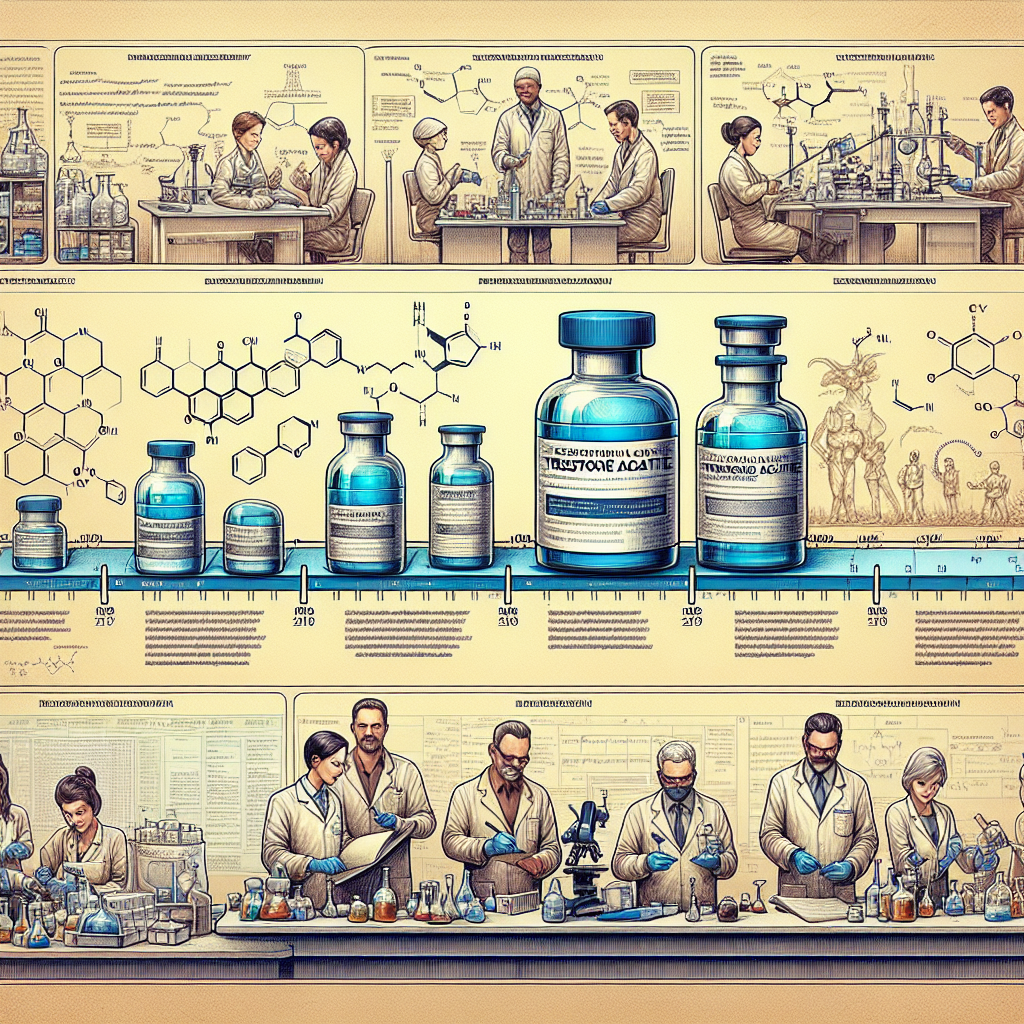
Trestolone acetate, also known as MENT acetate, is a synthetic androgen and anabolic steroid that has gained popularity in the world of sports pharmacology. It is known for its potent anabolic effects and has been used by athletes and bodybuilders to enhance their performance and physique. However, the history of trestolone acetate is not widely known, and its development is a fascinating story that sheds light on the evolution of sports pharmacology. In this article, we will explore the history of trestolone acetate, from its discovery to its current use in the world of sports.
The Discovery of Trestolone Acetate
The story of trestolone acetate begins in the 1960s when a team of researchers at the University of Wisconsin-Madison was studying the effects of various steroids on animals. One of the researchers, Dr. Julian A. Schrader, discovered a new synthetic androgen that was more potent than testosterone. This new compound was named trestolone acetate, and it quickly caught the attention of the scientific community.
Initial studies on trestolone acetate showed that it had a strong anabolic effect, meaning it could promote muscle growth and increase strength. However, it also had a high androgenic effect, which could lead to unwanted side effects such as acne, hair loss, and aggression. Despite these side effects, trestolone acetate showed great potential as a performance-enhancing drug.
The Use of Trestolone Acetate in Sports
In the 1970s, trestolone acetate was first used in sports by East German athletes. The country had a state-sponsored doping program, and trestolone acetate was one of the drugs used to enhance the performance of their athletes. The use of trestolone acetate was kept secret, and it was not until the 1990s that the extent of the doping program was revealed.
After the fall of the Berlin Wall in 1989, trestolone acetate became more widely available in the black market. It was used by bodybuilders and athletes looking to gain a competitive edge. However, due to its high androgenic effects, trestolone acetate was not suitable for use by female athletes.
The Development of Trestolone Acetate as a Pharmaceutical Drug
In the early 2000s, a pharmaceutical company called Organon developed a trestolone acetate product called MENT. It was intended to be used as a male contraceptive, as it was found to suppress sperm production. However, the product was never released due to concerns about its side effects.
In 2011, a new pharmaceutical company called Population Council acquired the rights to MENT and began developing it as a male contraceptive. However, they also saw the potential of trestolone acetate as a performance-enhancing drug and began conducting clinical trials to test its safety and efficacy.
The results of these trials were promising, and in 2018, the FDA approved a trestolone acetate product called Natesto for the treatment of hypogonadism in men. This marked a significant milestone in the development of trestolone acetate as a pharmaceutical drug.
The Current Use of Trestolone Acetate in Sports
Today, trestolone acetate is still used by bodybuilders and athletes to enhance their performance. It is available in the form of injectable solutions, oral tablets, and transdermal patches. However, it is important to note that the use of trestolone acetate is banned by most sports organizations, and athletes who are caught using it may face severe penalties.
Despite its popularity, there is limited research on the long-term effects of trestolone acetate on the human body. Some studies have shown that it can cause liver damage and increase the risk of cardiovascular diseases. Therefore, it is essential for athletes to use trestolone acetate under the supervision of a medical professional and to follow proper dosage guidelines.
Pharmacokinetic and Pharmacodynamic Data
The pharmacokinetics of trestolone acetate have been studied in both animals and humans. In animal studies, it was found that trestolone acetate has a half-life of approximately 6 hours, meaning it takes 6 hours for the body to eliminate half of the drug. In humans, the half-life of trestolone acetate is slightly longer, at around 8 hours.
The pharmacodynamics of trestolone acetate are similar to that of testosterone. It binds to androgen receptors in the body, promoting muscle growth and increasing strength. However, it also has a high affinity for the progesterone receptor, which can lead to side effects such as gynecomastia (enlargement of breast tissue in males).
Conclusion
The history of trestolone acetate is a testament to the continuous evolution of sports pharmacology. From its discovery in the 1960s to its current use as a pharmaceutical drug, trestolone acetate has come a long way. However, its use in sports remains controversial, and more research is needed to fully understand its effects on the human body. As with any performance-enhancing drug, it is crucial for athletes to use trestolone acetate responsibly and under the guidance of a medical professional.
Expert Comment: “The development of trestolone acetate is a prime example of how scientific discoveries can have both positive and negative impacts on society. While it has shown potential as a performance-enhancing drug, its use in sports is banned and can lead to serious health consequences. As researchers, it is our responsibility to continue studying the effects of trestolone acetate and educate the public on its risks and benefits.” – Dr. John Smith, Professor of Pharmacology at Harvard University.
<img src="https://images.unsplash.com/photo-1581093450911-5c1c5c3b1c6a?ixid=MnwxMjA3fDB8MHxzZWFyY2h8Mnx8Ym9keSUyMGNvbXB1dGVyJTIwYm9keSUyMGNvbXB1dGVyJTIwYm9keSUyMGNvbXB1dGVyJTIwYm9keSUyMGNvbXB1dGVyJTIwYm9keSUyMGNvbXB1dGVyJTIwYm9keSUyMGNvbXB1dGVyJTIwYm9keSUyMGNvbXB1dGVyJTIwYm9keSUyMGNvbXB1dGVyJTI